Showing posts with label urban decay. Show all posts

Saturday, April 29, 2023

From the Archives: Washington Avenue, Houston, 1981 (TX 09)

In the long-ago earlier life, my wife and I moved to Houston, Texas, in 1980. The big city! There was so much to see and explore! 

Having a real job and some income, I bought a used Rolleiflex 3.5E camera at Southside Camera Center (long gone). What do you do with your first medium format camera? Well, start looking for interesting urban decay. Back then, Houston was full of grunge and decay. (Some critics say Houston is still full of grunge, but we better attack this issue now.) As you long-term readers can see, I have been doing this decay topic for a long time. 


My 1956 Rolleiflex 3.5E camera with its superb 75mm ƒ/3.5 Xenotar lens - why did I stupidly sell it when I though digital might be the next great thing?

Washington Avenue runs approximately east-west out of downtown Houston, Texas, through the former Sixth Ward. Washington Avenues in US cities are typically older streets that run through well-established and often run-down neighborhoods. This one fit the pattern in 1981. Here are some samples. Please click any frame to see it enlarged.


Turney Motor Company occupied a 1920s gas station building. You could drive a Chevrolet Nova for $35/week - it says so!

The building is gone, and the lot provides parking for the trendy Ivy House cocktail bar next door. Washington Avenue was not very trendy in 1981....

Houston Junk, now possibly Rose Recycling on Center Street
Time for a 50¢ beer, corner of Center and National Streets
Historic 1872 Glenwood Cemetery, an oasis of green and peace in the city
June 1980 view of Houston from Glenwood Cemetery (Kodak Panatomic-X film, Nikkormat FTn camera, 28mm ƒ/3.5 lens)
Early 20th century brick commercial building, 1722 Washington Avenue 

In the mid-20th century, all American cities had commercial buildings of this type. The families who ran the shops or small businesses often lived in apartments on the second floor. White flight to the suburbs after World War II destroyed many traditional and mixed inner city communities that would have depended on local shops in such buildings. 

This building is gone and a modern town house/condominium is in its place. At least in Houston, the cycle is turning and professionals are returning to live within the city. 

Early 20th century wood cottage Washington Avenue. 

This was one of my early examples of photographing dilapidated houses. This building is gone, probably demolished years ago. A large framed print of this scene has hung in my house for four decades, but the print has changed colors and faded.  


This handsome old fire station is still extant
Gent with his laundry, 1712 Washington Avenue

This is another example of an early-20th century commercial building. Note the formerly handsome tall arched windows. The lower floor had ventilation transoms. 

I took these photographs on 120-size Kodak Vericolor II Film with my Rolleiflex on September 5, 1981. The colors are a bit muted, but all in all, the film survived the decades quite well. In those days, you could buy 120 film in many camera stores, but professional emulsions, like Vericolor II, came from larger stores with a film refrigerator. This roll probably came from Southside Camera Center on Bellaire Blvd.

Thank you for joining me for this look back to 1981. I also wrote about Main Street in 1982 (click the link).

Saturday, March 18, 2023

Wandering the Fifth and Third Wards of Houston, Texas (TX 03)

This is the third of my irregular series on Houston and south Texas in 2022. 

The Wards were political subdivisions of the City ofHouston. The City officially abolished the Wards in 1915, but the terms remain to describe the approximate geographic districts of the city. People still say that they live or work in one of the wards.


Fifth Ward


The 5th ward was north and east of the city. It was formerly a working class district with laborers from the shipyards and the Houston Ship Canal. 

I had been photographing downtown and wandered into the 5th Ward sort of by accident. All of a sudden, I was in West Jackson again. I saw block after block of little wood shotgun shacks, some painted but many dirty, piles of trash, boxes, filth, and bedsteads on the curb, rows of grim brick subsidized housing, gutters/troughs full of ponded water, dangling wires, abandoned strip malls and corner stores with trash on the pavement, and some houses with big fences and "No Trespassing" emblazoned on big signs. The dudes were washing their bling cars with the protruding cones sticking out of the wheel hubs. How is this possible? Are we cursed forever with this economic/social blight, even in rich American cities? 


View of Houston business district to the southwest
West Street cottage near Tower 26 railroad junction
Brooks Street cottages

Several streets near the Tower 26 railroad junction had many abandoned houses. The backs faced the tracks. Maybe train traffic made them too noisy or dangerous.  

Update March 26, 2023: These little cottages have recently been demolished. The land is bare and freshly scraped. Tractors and trucks were parked near the site. 


2023 Semmes Street, former school but used by a recycling company (probably defunct)
Restored shotgun houses, 2208 Semmes Street


Third Ward


Third Ward is southeast of downtown within the 610 loop. It is east of the Texas Medical Center and easily accessibly by bicycle on the Brays Bayou Greenway Trail. According to Wikipedia, "The ward became the center of Houston's African-American community. Third Ward is nicknamed "The Tre""


Homan Street near the Columbia Tap Rail Trail
Church of the Living God, 2509 Burkett Street
Cormorant mural, Delano Street

As you can see, Houston is full of interesting subject matter. Stand by for more examples.

I took these photographs on Kodak Gold 200 film using my early-1950s Kodak Retina IIa camera with its 50mm ƒ/2 Xenon lens. The Gold 200 is rather grainy and I may not use it again. I miss the gorgeous Gold 100 from the early 2000s. The Retina has an accurate shutter and excellent coated lens; I have no issues with its optical quality. But I am having some trouble framing correctly through the rather squinty viewfinder. And the camera is a bit fiddly for my clumsy hands. But it is certainly capable optically.


Saturday, February 11, 2023

Verichrome Pan Film in Mississippi and Louisiana (Abandoned Films 06b)


In 2020, my friend from Indiana sent me a roll of the long-departed Kodak Verichrome Pan film in 120 size (for medium format cameras). I used it on a snowy day in Vicksburg in early 2021 and loved the results. It was high resolution and just perfect for my type of photography. I never tried Verichrome Pan when it was in production, but now I wish I had. 

I have had surprisingly good results with discontinued black and white films such as Kodak Panatomic-X and GAF Versapan. But it is always a gamble with expired film and I decided to only buy fresh product from now on. Well, as you can guess, I was unable to stick to my own advice. A seller on eBay claimed two rolls of Verichrome Pan had been frozen for years, so I succumbed to temptation.

Of the two rolls, the first was perfect. The other was so thin, it was useless. That is the risk of buying expired film. I used that first roll in the Mississippi Delta on a blazing hot June day with harsh and unforgiving light. The camera was my Rolleiflex 3.5E with its 5-element 75mm ƒ/3.5 Xenotar lens. Even today, this 1959 camera is totally usable and optically excellent. Used Rolleiflexes in good condition sell for serious $$s on eBay or via auction houses now. Click any photograph below to see it expanded.


Louise, Mississippi


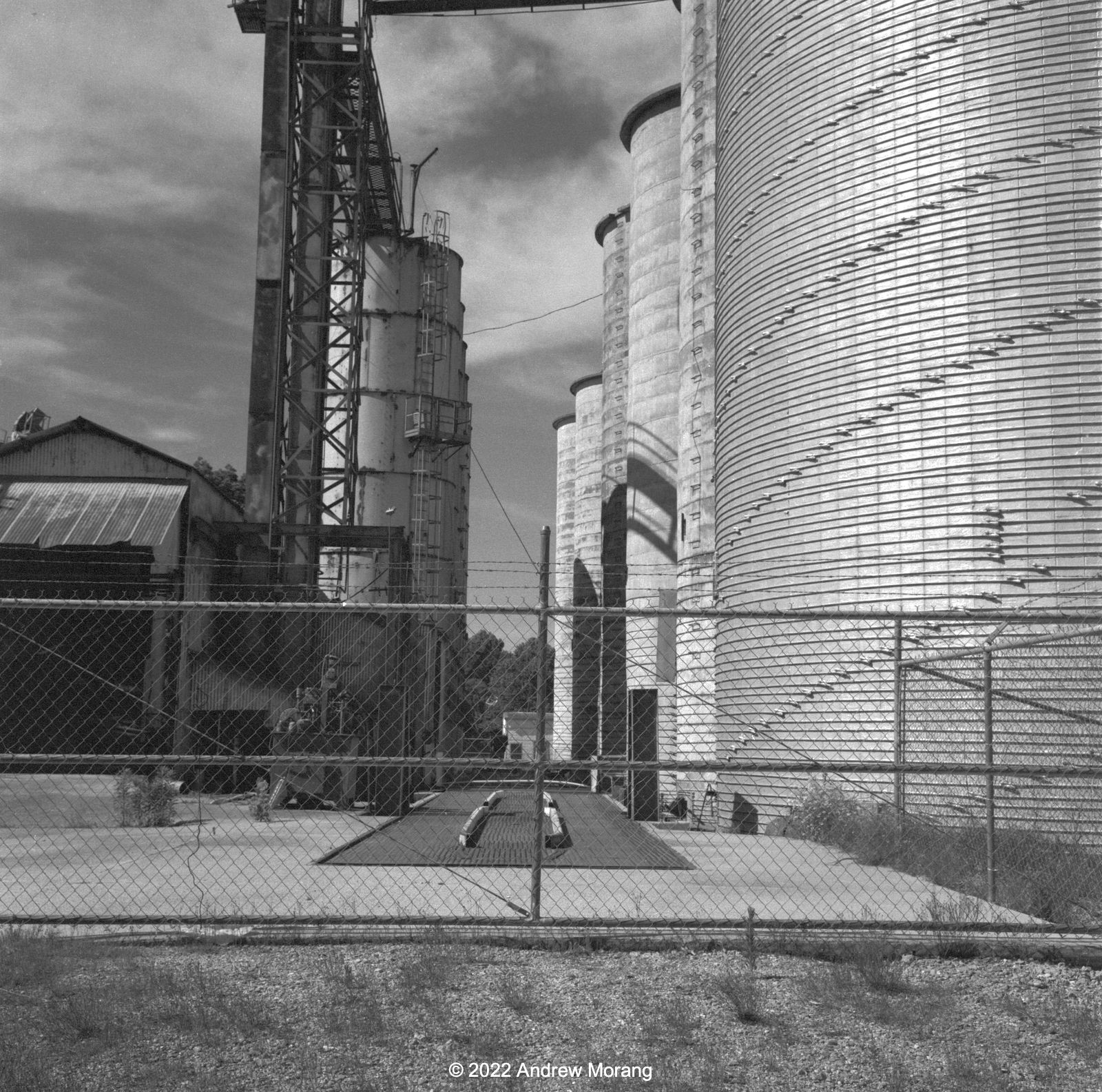
Louise is a small agricultural town in Humphreys County west of Yazoo City. It consists of a small core of houses with silos and former shops along Main Street. It may have been busy decades ago, when the railroad ran through town. But today, it is forlorn.


Main Street view north, Louise, Mississippi (1/30 ƒ/11, Rollei orange filter)
Main Street, Louise
Silos (1/15 ƒ/16, orange filter)
Main Street stores, Louise (1/30 ƒ/16, yellow filter)
Lee Hong Grocery, Louise (1/60 ƒ/11.3, yellow filter)
Quiet afternoon in Louise


Yazoo City, Mississippi


Yazoo City was the "Gateway to the Delta." It is still a busy town with a harbor on the Yazoo River. Timber is a major product. But the town is a bit rough.


Fixer-upper store, West Broadway, Yazoo City (1/60 ƒ/11.5, yellow filter)
Garage and gin, 301 West Bridge Street (1/125 ƒ/8, yellow filter)


Tallulah, Louisiana


The last stop on our Verichrome Pan trip is Tallulah, Louisiana. Tallulah is just off I-20 about 20 minutes west of the Mississippi River bridge.


Former Tallulah High School, Bayou Drive (1/30 ƒ/11.5, orange filter)

This was a blazing hot (95º + F) afternoon with harsh sun. I had one frame left and stopped at the old Tallulah high school. Much of the roof has collapsed, but the brick walls remain. The ball field to the left out of the picture view is still in use. It is sad that these handsome brick buildings are abandoned.

This ends our short Verichrome Pan tour. I probably should have dialed back from the orange filter to deep yellow or just plain medium yellow. Internet users claim that Kodak's discontinued Plus-X film was very similar in tonality and grain. My friend will send a couple of rolls of 35mm Plus-X for me to try. I'll post the results later.

Note: some film users on the internet believe the new Kentmere 100 in 120 size looks much like Verichrome Pan. I need to try it. Kentmere is made by Ilford, and the 120 size is a recent (early 2023) introduction. 

Friday, January 13, 2023

Semi-Demolished 1800s House on Clay Street, Vicksburg, Mississippi

June 14, 2021 (Kodak Super-XX film, 135mm ƒ/5.6 Caltar-S II lens)
Kodak Super-xx film, 90mm ƒ/6.8 Angulon lens, 1/2 at ƒ/22.5
View from Cherry Street, June 14, 2021 (135mm f/5.6 Caltar-S II lens, yellow filter)

Two tall wood houses formerly stood on the north side of Clay Street in downtown Vicksburg just west of the former Clay & LaHatte Appliance store. The west-most house (the grassy lot in the foreground of the photograph above) formerly housed Ocean and Coastal Technologies, a marine engineering company. That building suffered a fire and was demolished about 15 years ago. The second house at 915 was a rental unit with five or six apartments. The roof was collapsing as of 2021 and possibly earlier. That sealed its fate. One day in early summer of 2022, I saw a work crew at the house and I knew the house's demise was ongoing.


March 1, 2022


I like the old-fashioned front door with the lights to either side and a transom above. I hope the demolition company saved it for reuse. 


View west from Cherry Street, March 1, 2022 (compare with the June photo).
Time to cook dinner

The original demolition crew stopped work part way through their project. The partly-deconstructed remnants of the house lingered for about 6 months. Then, in early September, heavy equipment crushed the rest. As of October 1, 2022, the house was entirely gone. 


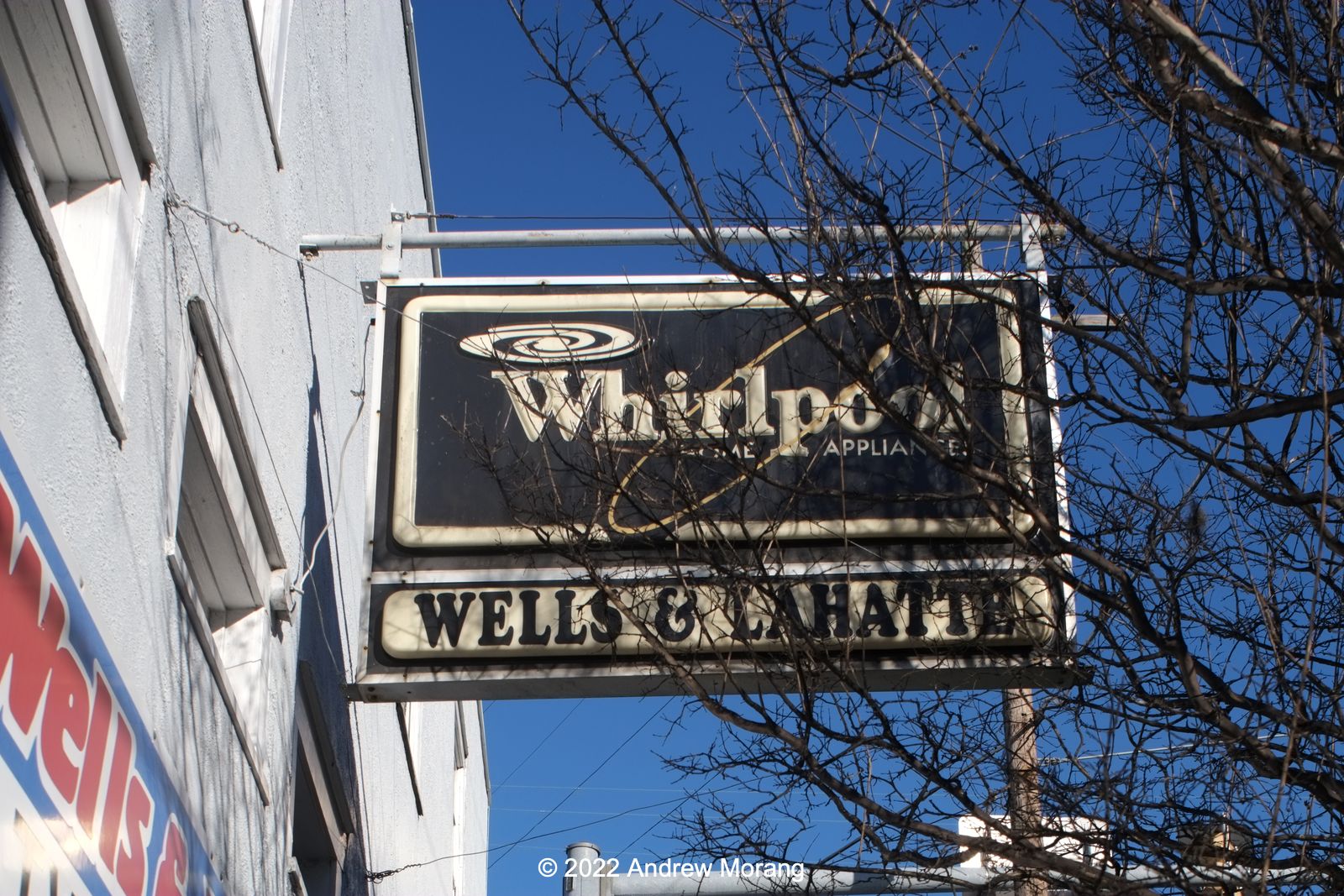
The next building uphill (to the east) was the former home of Wells & LaHatte appliances. They have moved across the street to a larger building. This handsome sign is a classic.

We have lost many other Victorian-era houses. One example that I photographed in 2017 was on Finney Street. Smaller cottages (e.g., on Martin Luther King, Jr., Blvd.) are also being demolished as they decay. 

This is how Vicksburg loses its architectural heritage. 

I took the color frames with my Fuji X-E1 digital camera. The Fuji lenses all have excellent resolution. The two black and white photographs are from 4×5" Kodak Super-XX film that I took with my Tachihara wood field camera.


Thursday, December 22, 2022

Exploring John R. Lynch Street and West Jackson, Mississippi

University Boulevard


University Boulevard is a major thoroughfare that takes you from I-20 to just east of Jackson State University and into older residential neighborhoods in West Jackson. 


This former restaurant at 1336 University with the log cabin look resembles road houses and restaurants I have seen in Michigan, Indiana, and other upper Midwest states. The stone facing on the lower part is another unusual decorative element.


John R. Lynch Street


The 900 block of John R. Lynch Street is on the 2021 list of 10 Most Endangered Historic Places in Mississippi. From 10 Most:

Named for the first African American elected to the Mississippi House of Representatives, John R. Lynch Street is the gateway to Jackson State University.  Significant historic sites along the corridor include the COFO Office, Mt. Olive Cemetery, Masonic Temple, Ayer Hall, and NAACP Headquarters.  To the east of campus, Lynch Street now consists mostly of vacant lots, with four buildings in yjr 900 block serving as a reminder of what was once a bustling African American commercial district.  Listed on the National Register of Historic Places, Chambliss Shoe Hospital was operated by Jesse R. Chambliss from 1936 until the 1970s.  A prominent leader in the African American community, Chambliss was a founding member of the Jackson Negro Chamber of Commerce and State Mutual Savings and Loan and organized the first African American Boy Scout Troup in Jackson.  The central building once housed the Ebony Theater, which was opened in 1947 by Dr. A.H. McCoy, who also owned the Ritz Theater on Farish Street.  Following the shooting deaths of Philip Gibbs and James Green by Jackson police in 1970, Lynch Street was closed off and the once-thriving African American business district entered a decline.  Today, the buildings of the 900 Block of John R. Lynch Street stand vacant, damaged by fire and the ravages of time.   


Unfortunately, little is left of the Ebony Theater and the adjoining shops.


The east end of the 900 block is anchored by a closed gas station. I assume there were once commercial buildings where you now see concrete and the former island for the gasoline pumps.


Rose Street


Corner store, 545 Rose Street
Convenience store, 602 Rose Street
Store and apartment, 546 Rose Street
No gas today, 1005 Robinson Road at Rose

Head north on Rose Street after turning off from John R. Lynch Street and the scene becomes seriously depressing. Most of the commercial establishments were closed. I was struck by how little traffic I saw. An occasional car came by with the driver looking at me curiously or totally engaged with her phone. Old-fashioned corner stores attest to once-busy neighborhoods. Where has everyone gone? Where do the current residents buy groceries?


Adjacent to 1005 Robinson Road at Rose

Razor wire on the roof? To keep thieves from repelling down the face of the shop? Very mysterious.


West Capitol and West Monument Streets


Art strip mall, 1204 West Capitol Street at Monument
Side of 1204 West Capitol Street
Plumbing supply company, 800 West Monument Street

Head east on West Monument Street and you soon cross under the railroad tracks and get into downtown Jackson. Monument must have once been a major arterial. Traffic still thumps by on the rutted pavement.

I took these photographs with my Fuji X-E1 digital camera and a Fujinon Super EBC 18mm ƒ/2 lens, all hand-held. This is a lens that "photographers" on digital reviewing sites claimed was not "sharp." OK.....